Leverage and liquidation: how futures losses really happen
On this page
Leverage lets you open a position larger than the money you post as margin. It does not change how much you lose per dollar of price movement; it changes how little movement it takes to wipe out that margin.
Margin and position value
With 10× leverage, 600 USDT of margin controls a position worth 6,000 USDT — for example 0.1 BTC at 60,000. If BTC falls 5%, the position loses 300 USDT. That is 5% of the position, but half of the margin.
The loss per dollar of movement depends on the position size, not the leverage. Leverage only decides how much of your own money is tied to the position, and how close liquidation is.
Perpetual futures also charge or pay a funding rate, usually every eight hours, between long and short traders. On a position held for days, funding can add up to a meaningful cost, and it is charged on the full position value, not on your margin.
How far away is liquidation?
When losses eat most of the margin, the exchange closes the position: liquidation. A simplified estimate for an isolated long, ignoring fees and funding, is entry × (1 − 1/leverage + maintenance margin rate). With a 0.5% maintenance rate and an entry at 60,000:
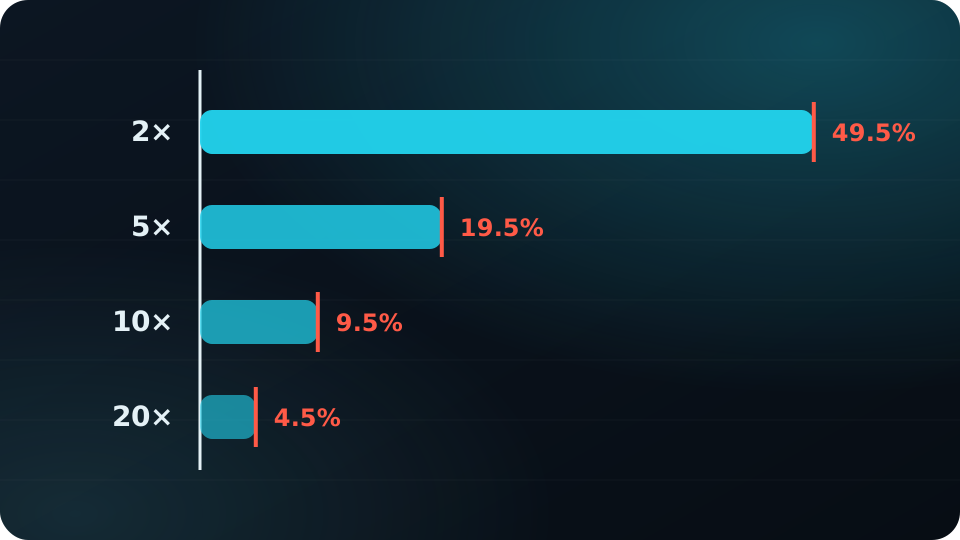
- 2× → liquidation near 30,300, about 49.5% below entry
- 5× → near 48,300, about 19.5% below
- 10× → near 54,300, about 9.5% below
- 20× → near 57,300, only 4.5% below
Each exchange uses its own formula and margin tiers, so treat these as illustrations. The pattern holds everywhere: double the leverage, roughly halve the room.
Why losses can exceed your margin
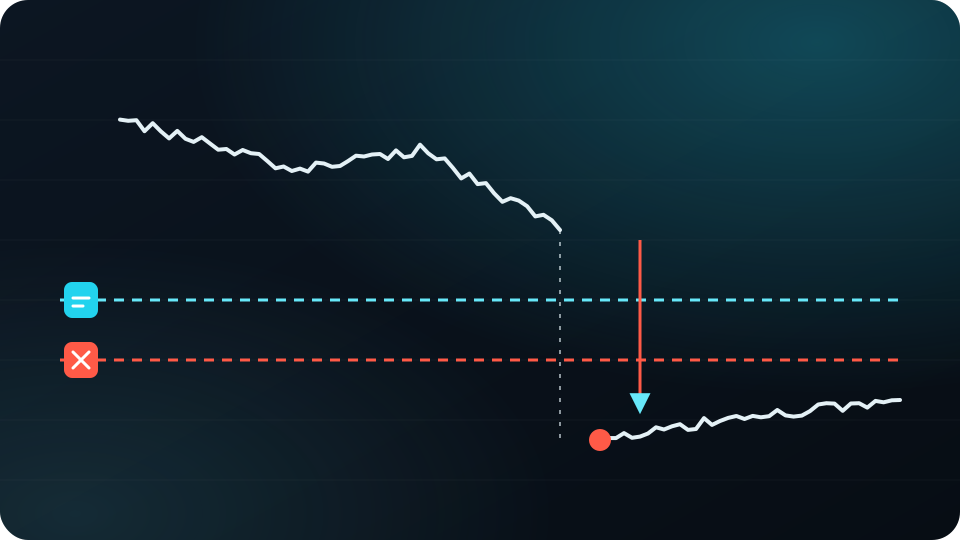
Depending on the venue and margin mode, you can lose more than the margin you set aside for one trade. With cross margin, losses draw on your whole account balance. In fast markets price can gap past your stop and liquidation price, fees and funding add up while a position is open, and on some regulated futures markets a negative balance is a debt you owe.
Using leverage without letting it use you
Size the position from your stop first, as in the position sizing guide. Then choose the lowest leverage that lets you post the margin, and check that the liquidation price sits well beyond your stop. If liquidation is closer than your stop, the position is too large.
For education only, not financial advice. Trading with leverage or futures can lose more than your margin. All examples are illustrative.
Get the next guide in your inbox
One practical email a week. Free, unsubscribe anytime.
Or follow Tradevo on TelegramMarket now
Latest news