Position sizing: the 1% rule, worked through
On this page
Most traders decide how much to buy first and think about the stop later. Position sizing turns that around: you decide what you are willing to lose if you are wrong, and the size of the trade follows from it.
The formula
Position size equals the amount you are willing to lose divided by the distance from your entry to your stop-loss. That is the whole formula. Many traders cap the loss at 1% of the account per trade; some use 0.5% or 2%. The exact number matters less than using the same rule every time.
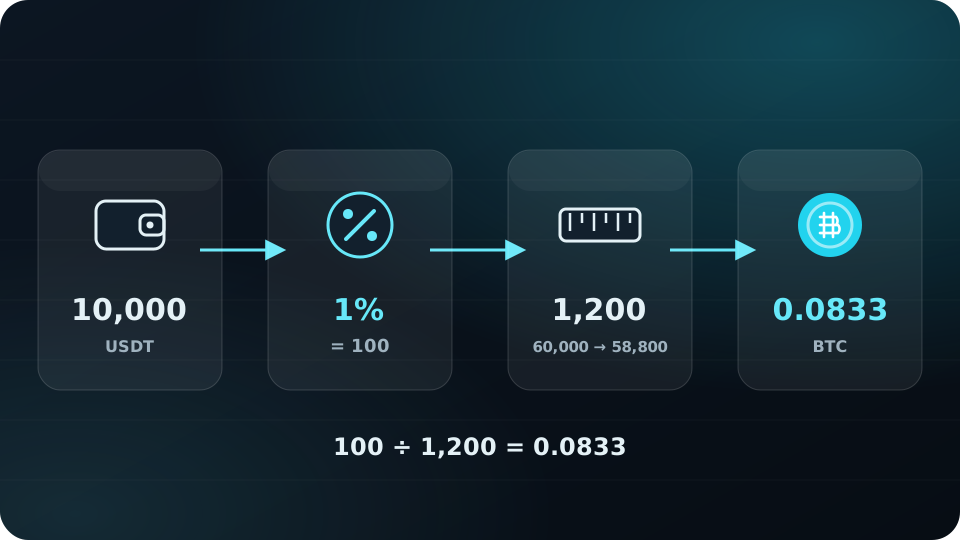
Here is an illustrative example. Your account holds 10,000 USDT and you risk 1%, so the most you accept losing is 100 USDT. You plan to buy BTC at 60,000 with a stop at 58,800. The stop is 1,200 dollars away, or 2% below entry.
- Amount at risk: 10,000 × 1% = 100 USDT
- Stop distance: 60,000 − 58,800 = 1,200 (2% of the entry price)
- Position size: 100 ÷ 1,200 = 0.0833 BTC, worth about 5,000 USDT
The stop decides the size, not the other way round
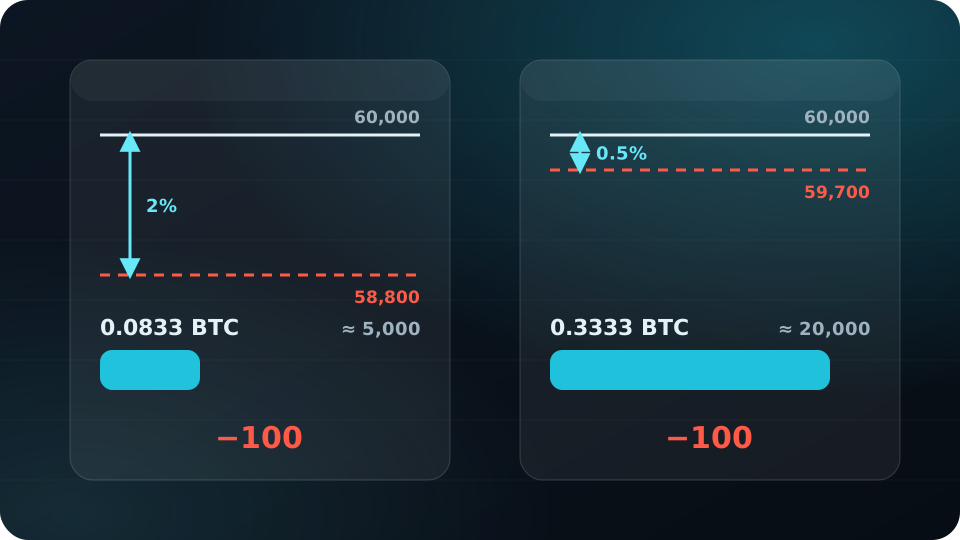
Put the stop where the trade idea is proven wrong — below the level you are trading, for example — and then size the position. If you place the stop first and shrink the distance just to buy more, you are only making it more likely to be hit.
Keep the same 100 USDT risk but tighten the stop to 59,700, just 0.5% below entry. The size becomes 100 ÷ 300 = 0.3333 BTC, a position worth about 20,000 USDT — twice the account. You could only open it with leverage, and the loss at the stop is still 100 USDT.
Why a small percentage matters
Losing streaks are normal, even for a strategy with an edge. If you risk 1% of your current balance and lose ten trades in a row, the account falls from 10,000 to about 9,044 USDT. Risk 5% per trade and the same streak leaves about 5,987 USDT, a 40% drawdown that needs a 67% gain just to recover.
A small fixed risk keeps any single trade, and any bad week, from deciding your results.
What the formula leaves out
- Fees and slippage — a market order can fill worse than your stop price, especially in fast moves.
- Gaps — price can jump past your stop. Leveraged positions can then lose more than planned.
- Correlation — three long trades on BTC, ETH and SOL are closer to one big trade than three small ones.
For education only, not financial advice. Trading with leverage or futures can lose more than your margin. All examples are illustrative.
Get the next guide in your inbox
One practical email a week. Free, unsubscribe anytime.
Or follow Tradevo on TelegramMarket now
Latest news