A trade journal you will actually keep

A trade journal turns your trading history into data you can learn from. Most journals fail because they ask for too much. Seven fields and one weekly review are enough to start.
Seven fields
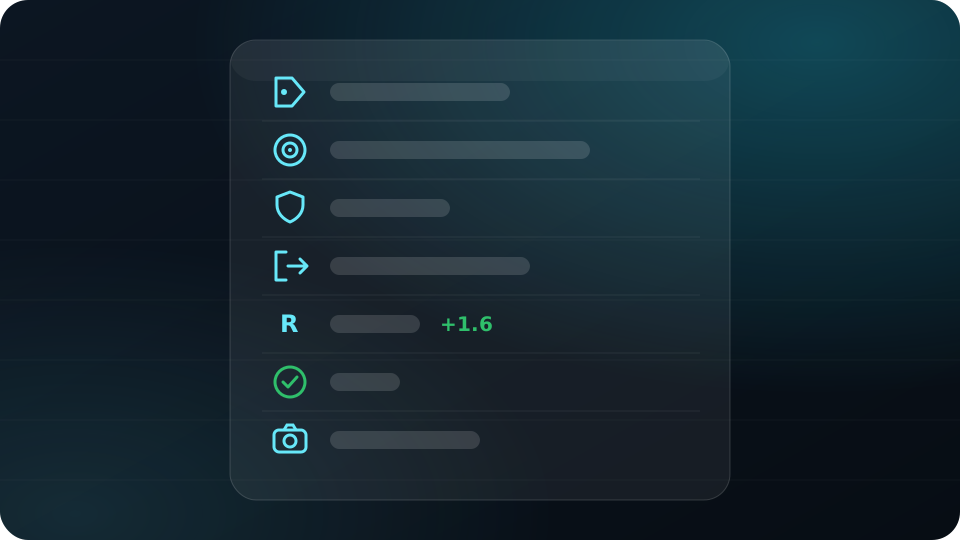
Record these for every trade, at the moment you enter and exit, not from memory at the end of the week:
- Setup — the name of the pattern or reason for the trade, from a short fixed list.
- Entry, stop and target — the plan, written before the order is placed.
- Risk — the amount at risk, which defines 1R for this trade.
- Exit — the price and the reason: stop, target or a rule.
- Result in R — for example +1.6R or −1R.
- Rules followed? — yes or no, with one word on what broke.
- Screenshot — the chart at entry and at exit.
The weekly review
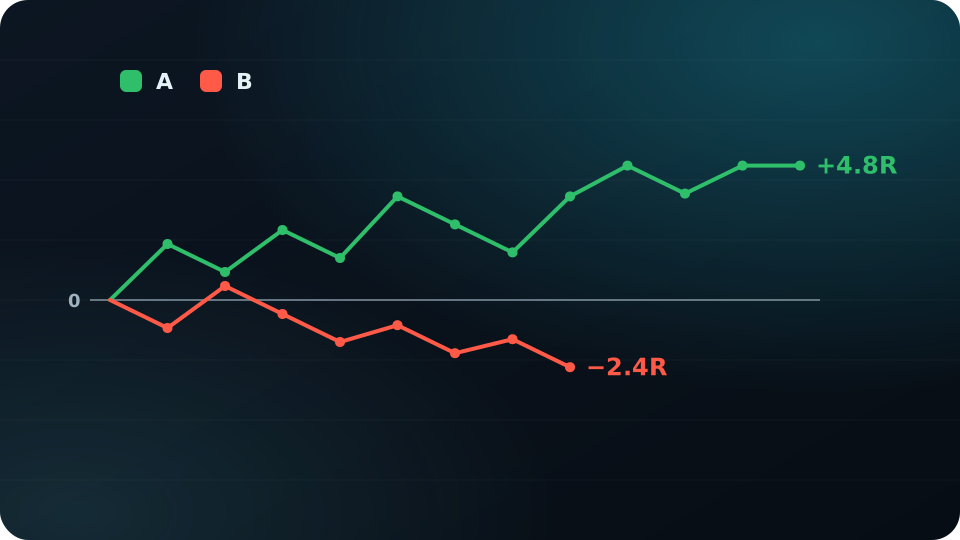
Once a week, sort trades by setup and add up the results in R. Illustrative example: after 20 trades, setup A shows +4.8R over 12 trades (+0.4R each) and setup B shows −2.4R over 8 trades (−0.3R each). The useful question is not whether you won the week, but which setup earns its place.
- Which setup has positive expectancy, and over how many trades?
- How many losses came from breaking a rule rather than from the setup?
- Did any single trade risk more than planned?
Make it fast to fill in
A journal you skip on busy days is worse than a short one you always complete. Three habits help:
- Use a fixed template — a spreadsheet or a note with the same seven fields every time, so nothing has to be decided in the moment.
- Fill in the plan before the order — entry, stop, target and risk take a minute to write and stop you from improvising.
- Close the entry the same day — exit, result and screenshot while the trade is still fresh in your mind.
Keep it honest
Log every trade, including the impulsive ones you would rather forget; they are often where the costs hide. Twenty trades is a small sample, so treat early numbers as hints and keep collecting before drawing firm conclusions.
When a review suggests a change, change one thing at a time — a rule, a setup, the risk per trade — and keep logging. Otherwise you cannot tell which change made the difference.
For education only, not financial advice. Trading with leverage or futures can lose more than your margin. All examples are illustrative.
Get the next guide in your inbox
One practical email a week. Free, unsubscribe anytime.
Or follow Tradevo on TelegramMarket now
Latest news